
If you’ve spent any time searching for IPTV, you’ve seen the massive price gap. Some services promise the moon 20,000 channels for the price of a coffee, while premium providers charge significantly more.
You might be asking: “Why pay more if I can get it for rock-bottom prices?”
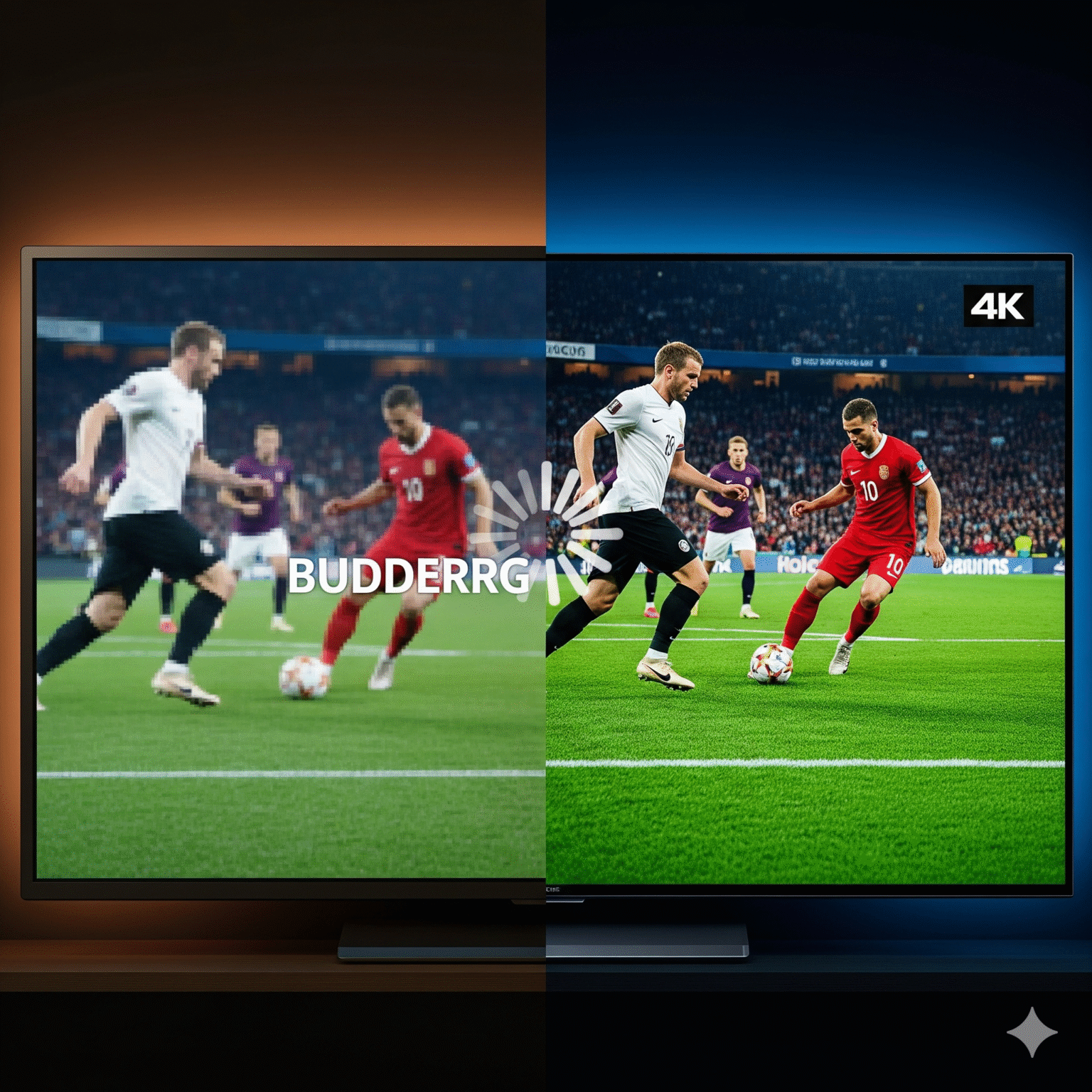
As industry insiders, we’re going to be brutally honest with you. The difference isn’t just a few dollars; it’s the difference between watching the Super Bowl in kristallklar 4K and staring at a buffering circle while your neighbors cheer.
Here is exactly what your money buys in the IPTV world and why going “billig” is often the most expensive mistake you can make.
The Three Tiers of IPTV: Know What You're Buying
To understand why some services fail, you need to understand the infrastructure.
The “Burner” Services (Budget Tier): These are run by mass resellers. They buy credits in bulk from massive, oversold server farms. They have zero control over the servers, zero technical skill, and when the stream dies, they can’t fix it. You get what you pay for: a gamble.
The Premium Private Servers (The Sweet Spot): This is where quality lives. These services are run by administrators who own their servers. They invest in high-bandwidth dedicated lines, limit user caps to prevent crashing, and offer real support. This is the tier for serious viewers.
The Corporate Giants (Official Tier): Fubo, YouTube TV, etc. You are paying for copyright licenses and corporate overhead. Great uptime, but arguably overpriced for the content you get.
1. Picture Quality: Why Bitrate is King
The single biggest technical difference you will notice immediately is compression.
The Cheap Route (Heavily Compressed): Bandwidth is expensive. To sell subscriptions for pennies, cheap providers must squeeze the video signal to death.
Fake 4K: They label channels “4K” or “FHD,” but it’s often a low-bitrate 720p stream upscaled. It looks muddy on anything larger than a phone.
Low FPS (The Sports Killer): Sports feeds are often capped at 25 FPS. The result? The ball “ghosts” or blurs during fast movement.
The Premium Experience (Raw Feeds):
True Source: Premium servers capture raw satellite feeds with minimal compression.
60 FPS Smoothness: We prioritize high frame rates (50/60 FPS). This makes football, racing, and hockey look exactly like they do on cable smooth and fluid.
Immersive Audio: Instead of crushing audio to stereo, premium lines often pass through 5.1 Surround Sound for your home theater.
2. Reliability: Avoiding the "Blackout"
Why do cheap streams always buffer during the big game? It’s simple math: Overselling.
The Airline Model (Cheap): Budget providers operate like budget airlines they sell thousands more subscriptions than their servers can hold, betting that not everyone watches at once.
The Result: During the Champions League Final or a UFC Main Event, everyone logs in. The server hits 100% load, and the stream dies. You miss the knockout.
The Stability Model (Premium): We use User Caps och Load Balancers. If a server reaches capacity, we stop selling to keep a safety buffer. If a server goes down, our load balancers instantly move you to a backup node often before you even notice a glitch.
3. The "50,000 Channels" Trap
Don’t be fooled by the numbers game. It is a marketing trick.
Cheap: “Get 50,000 Channels!”
The Reality: 40,000 of these are 24/7 automated loops, broken links, or duplicates (e.g., “ABC East,” “ABC West,” “ABC FHD,” “ABC Backup”). It clogs up your device and makes finding a working channel a nightmare.
Premium: “4,000 Curated Channels.”
The Reality: A clean, maintained list. We remove dead channels weekly. We pay for a premium EPG (TV Guide) source so you actually know what’s playing. Quality > Quantity.
4. VOD & Catch-Up: The Library Difference
Cheap:
VOD: Often filled with “CAM rips” (recorded in a cinema with a camera) or low-quality files scraped from the web.
Catch-Up: Non-existent. If you missed the show, it’s gone.
Premium:
VOD: A private Netflix-style library of high-bitrate 4K movies and shows, stored on fast NVMe servers.
Catch-Up: The ultimate convenience. We record major channels continuously, letting you scroll back 24–72 hours in the guide to replay a show you missed. This requires massive storage, which is why premium costs slightly more.
5. Security & Support: Who Are You Trusting?
This is the hidden risk no one talks about.
Funktion | Cheap / Mass Reseller | Premium Private Server |
|---|---|---|
Support | Ghosts. Once they have your money, good luck getting a reply. Expect generic automated emails or total silence when things break. | Active Community. Access to Discord/Telegram groups or responsive ticket systems where admins actually fix reported channels. |
Longevity | Exit Scams. These sites pop up, collect yearly payments for a few months, and then vanish. You lose your money. | Reputation. Established premium services run for years because they value recurring monthly subscribers over quick scams. |
Security | Risky. Cheap apps may contain malware, and your data is often sold to cover costs. | Privacy Focused. Better operational security and privacy protection for clients. |
The Verdict: Stop Wasting Money on "Cheap"
Is saving a small amount worth missing the winning goal? Is it worth the headache of scrolling through thousands of broken channels?
Who is Budget IPTV for?
People watching on a small phone screen.
Casual viewers who don’t care about live sports.
Those who enjoy constantly hunting for new providers.
Who is Premium IPTV for?
The Sports Fan: You need 60 FPS and zero buffering during the game.
The Home Theater User: You have a 4K TV and want the picture to look crisp, not blocky.
The Family: You need a “Wife Approved” service that works when you click it, with a working TV guide and catch-up.
Stop gambling with your entertainment. You get exactly what you pay for. Upgrade to a premium service where stability, quality, and support are standard not a luxury.
 Swedish
  English (United States)
  German
  Dutch
Dutch  Danish
  English (UK)
  English (Australia)
  English (New Zealand)
  Norwegian