
If you’ve spent any time looking into cutting the cord, you already know the buzzword. You run a quick search for the beste IPTV-dienst, and suddenly your screen is flooded. Telegram groups, Reddit threads, and obscure forums are all handing out free links promising thousands of channels.
It sounds amazing, right? Just do a quick IPTV playlist download, plug it into your favorite app, and you’re good to go. But before you load up that M3U-bestand, we need to talk about the reality of these free public lists.
Are they actually legal? Or are you taking a massive gamble just to catch the weekend game on your favorite IPTV-sportzenders?
I’ve tested countless streams and tweaked endless settings on apps like IPTV Smarters Pro, and I can tell you the answer isn’t a simple “yes” or “no.” The tech itself is completely fine. The content you’re watching? That’s where things get messy.
The Tech Is Just a Tool
Let’s clear up a massive misconception right out of the gate. The technology behind IPTV (Internet Protocol Television) is 100% legal.
An M3U playlist is literally just a text document. Think of it as a digital phonebook for your media player. When you set up IPTV voor Firestick, an Android TV, or a dedicated IPTV-box, the file simply points your device to a video feed hosted somewhere on the internet. Legitimate broadcasting giants use this exact same protocol every single day.
Using an M3U file is no different than clicking a hyperlink on an IPTV streaming site. The legal line is crossed entirely based on wat that link points to.
When Free Playlists Are Perfectly Legal
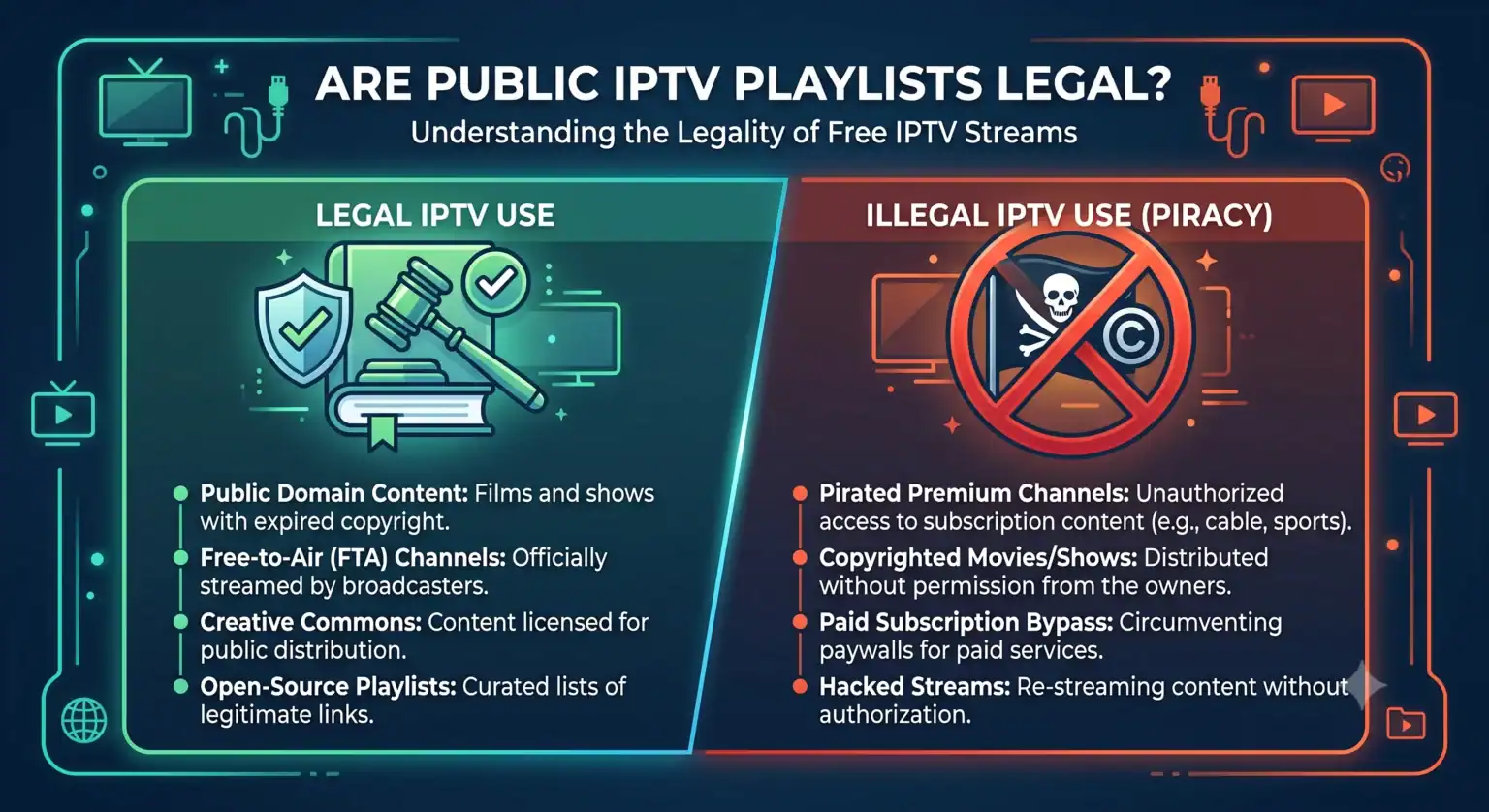
Ja, legale IPTV exists in the public domain. There are fantastic, community-driven playlists out there that are entirely above board.
How? Because they only aggregate Free-to-Air (FTA) channels. Broadcasters around the world from local news stations to international public networks stream their content online for free. If a developer compiles these official, freely available URLs into one organized list, you aren’t breaking any laws by watching them. You’re just accessing content the network already made public.
Crossing the Line: When Streams Become Illegal
Here is the harsh truth. If you stumble onto a public playlist that unlocks premium movie networks, exclusive PPV events, or top-tier sports packages without requiring you to een IPTV-abonnement kopen… you already know what’s going on. That’s pirated content.
The people hosting those servers do not have the expensive broadcasting rights required to distribute that media. While law enforcement primarily targets the operators selling these illegal feeds, using them absolutely violates copyright law.
Waarschuwingssignalen om op te letten
If you’re browsing the web for a new provider or testing out an IPTV-proef, keep your guard up. Here’s how you spot a shady operation:
The “Lifetime” Illusion: If a service offers you every premium channel on earth for a one-time payment of $30, run. Premium IPTV providers have massive server bills and licensing fees. Lifetime deals are almost always unauthorized restreamers who will disappear with your money in a few months.
Zero Customer Support: Legitimate companies have help desks and secure payment portals. If you’re paying in crypto to an anonymous WhatsApp number, you’re dealing with the black market.
The Buffering Nightmare: This is the biggest practical issue. Free, pirated lists are shared thousands of times over. The second a massive sporting event begins, the servers melt under the traffic. That “free” stream usually dies exactly when you want to watch it most.
The Smart Way Forward
Building your own custom entertainment hub is a great experience, especially if you’re using slick interfaces like IPTV Smarters or TiviMate. If you want to explore the free route, stick to vetted, open-source community lists that strictly feature FTA channels.
But if you want premium networks, reliability, and zero legal headaches? Skip the sketchy freebies. Research reputable providers, pay for a legitimate service, and enjoy your TV without the endless buffering.
 Dutch
Dutch  English (United States)
  German
  Danish
  English (UK)
  Norwegian
  Swedish