
There was a time when cutting the cord felt like a minor victory. You canceled your bloated $120-a-month cable package, picked up a Netflix subscription, and felt like you beat the system.
Fast forward to 2026, and the joke is on us.
The streaming landscape has fragmented into an expensive, frustrating mess. To watch live sports, local news, and the latest trending series, you now need a patchwork of five or six different apps. By the time you add up your monthly subscriptions for Netflix, Disney+, Prime, a live sports package, and premium movie networks, you are right back to paying a triple-digit cable bill.
This fatigue is exactly why millions of households worldwide are entirely abandoning traditional streaming apps and legacy cable. Instead, they are turning to IPTV (Internet Protocol Television).
If you are wondering why IPTV has suddenly become the worst-kept secret in modern entertainment, here is a breakdown of what is driving the massive shift this year.
1. The Death of the "Streaming Bundles" (And Massive Cost Savings)
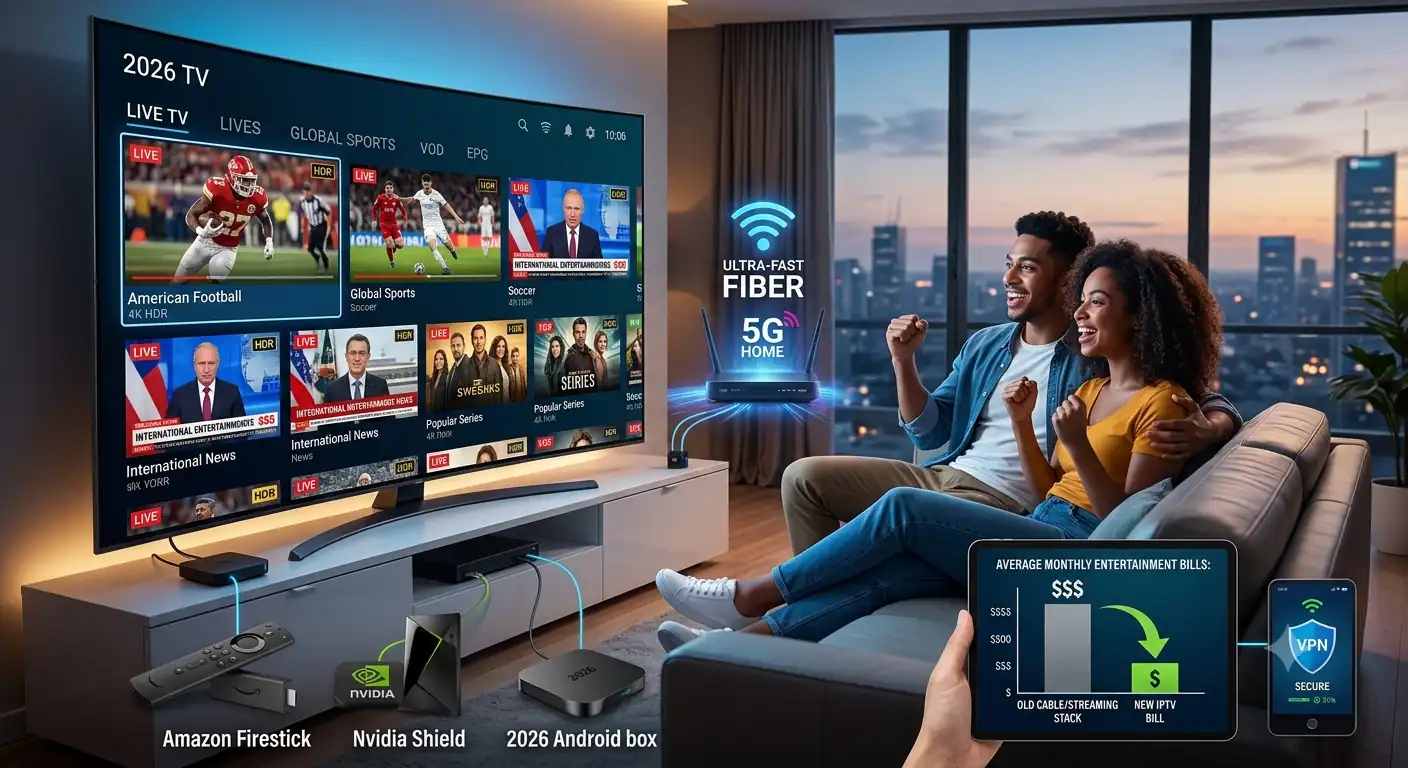
The primary driver behind the IPTV boom is simple math. According to recent consumer data, the average household bill for stacked streaming services has crept past $130 per month. Traditional cable packages are even worse, frequently eclipsing $150 when you factor in regional sports fees, broadcast surcharges, and hardware rentals for outdated boxes.
A premium IPTV subscription completely flips the script. For a fraction of that price typically ranging between $10 and $25 per month users gain access to thousands of live channels, international broadcasts, and massive Video-on-Demand (VOD) libraries. It effectively consolidates your entire media diet into a single login.
2. Buffering is No Longer an Issue
For years, the biggest knock against internet-based television playlists was reliability. No one wants to watch a critical playoff game or a live news broadcast only to have the screen freeze on a spinning loading wheel.
By 2026, the technology backing top-tier IPTV infrastructure changed the game. High-end providers now leverage decentralized Content Delivery Networks (CDNs), load-balanced server clusters, and advanced anti-freeze protocols. When you combine this server-side optimization with the widespread adoption of high-speed fiber internet and 5G home broadband, streaming performance is buttery smooth. Buffering has largely been engineered out of the equation.
3. The Ultimate Haven for Sports Fans
If you are a sports fan, navigating mainstream television right now is a logistical nightmare. One game is exclusive to a specific tech giant’s streaming platform, the next requires a regional cable network, and pay-per-view events cost a small fortune.
IPTV has become the ultimate workaround for sports enthusiasts. A single playlist routinely aggregates:
Major domestic packages (NFL Sunday Ticket, NBA League Pass)
International soccer leagues (Premier League, Champions League)
Niche motorsports, Formula 1, and global cricket
Live Pay-Per-View (PPV) events like UFC and boxing matches
Instead of maintaining multiple apps just to follow your favorite teams, everything lives inside one electronic program guide (EPG).
4. Hardware Freedom: Use the Devices You Already Own
Traditional cable operations love tying you down to contracts and equipment fees. They charge you a monthly lease for every single box attached to a TV in your home.
IPTV is completely platform-agnostic. It runs via lightweight applications on hardware millions of people already own, including:
Android TV boxes and Nvidia Shield
Smart TVs (Samsung, LG, Sony)
Smartphones, tablets, and laptops
Setup takes less than five minutes. Once you plug your subscription credentials or M3U playlist link into a premium media player like TiviMate or IPTV Smarters, your entire content library is instantly unlocked.
5. Global Access for Multicultural Households
We live in a globalized world, but traditional television providers still rely on strict geographical boundaries. If you want to watch live television from the UK, France, Germany, Latin America, or Asia while living in North America, standard cable providers offer very few options.
Because IPTV routes data entirely over the internet, geographic borders disappear. Multicultural households can stream native news broadcasts, regional dramas, and cultural events from their home countries in real-time, matching the exact viewing experience they would have locally.
A Note on Smart Streaming in 2026:
To maximize performance and protect digital privacy, a growing number of cord-cutters pair their setup with a reliable Virtual Private Network (VPN). A VPN prevents local Internet Service Providers (ISPs) from throttling streaming speeds during high-traffic live events, ensuring consistent 4K and Full HD picture quality.
The Bottom Line
The massive migration toward IPTV isn’t just a fleeting tech trend; it is a consumer revolt against fragmented apps and soaring subscription fees. By offering a unified, high-definition viewing experience that covers live sports, international networks, and on-demand movies for a fraction of traditional costs, IPTV has officially claimed its spot as the future of home entertainment.
 English (United States)
  German
  Dutch
Dutch  Danish
  English (UK)
  Norwegian
  Swedish