
As IPTV-Plattformen dominate modern digital entertainment, they are increasingly exposed to advanced cyber threats. Hackers now specifically target IPTV infrastructure due to its high bandwidth usage, valuable content rights, and growing subscriber bases.
Dies Leitfaden explains the most common cyber attacks against IPTV-Dienste and the enterprise-grade security measures used by stable, high-uptime providers.
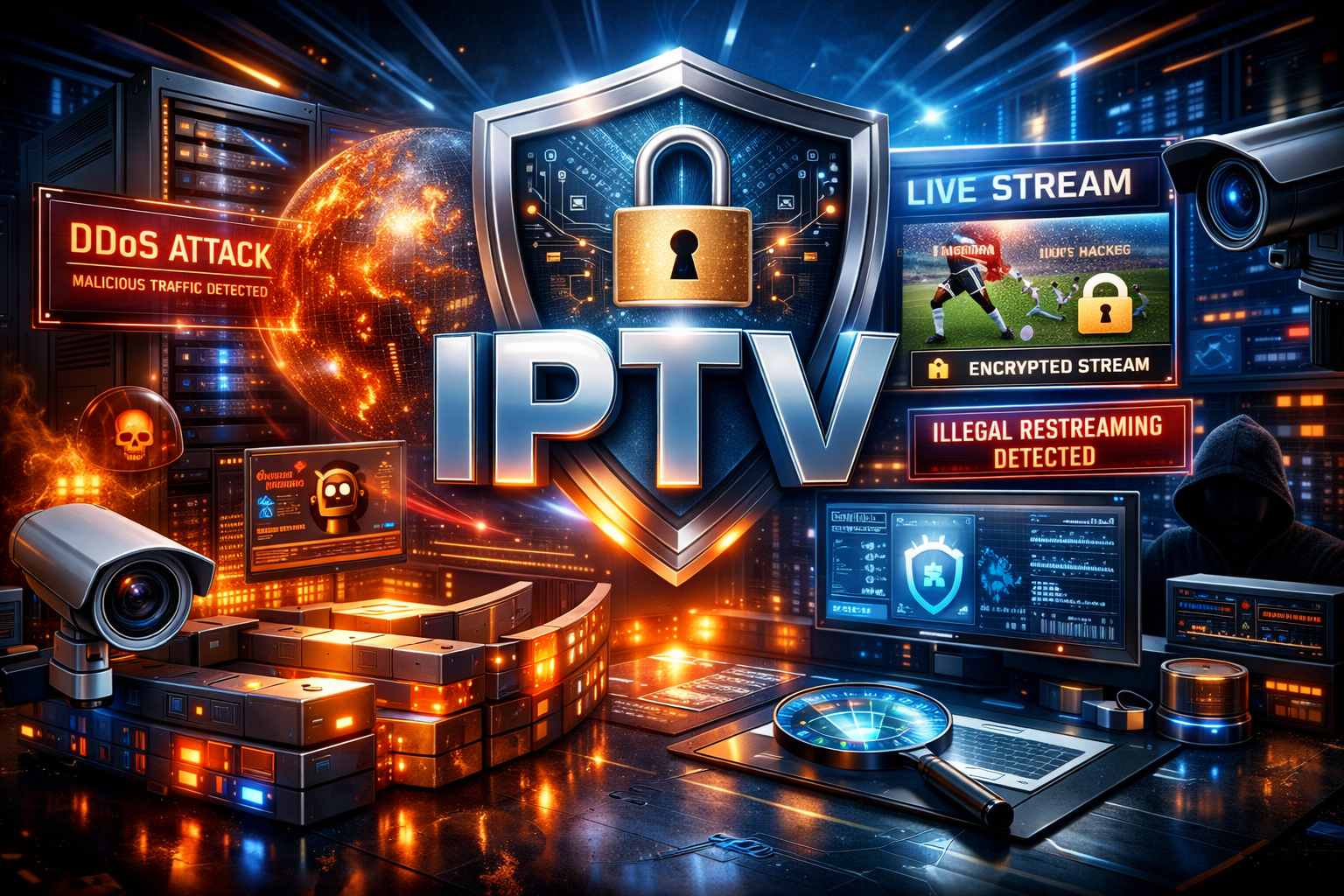
Why IPTV Platforms Are Major Cybersecurity Targets
IPTV-Dienste rely on a complex ecosystem of:
Streaming servers
Content delivery networks (CDNs)
Middleware and APIs
Billing and user authentication systems
Each layer represents a potential vulnerability. A single exploit can lead to service disruption, data leaks, or total platform shutdown.
Cybercriminals target IPTV platforms for:
Illegal access to premium channels
Disrupting competitors via outages
Reselling stolen IPTV-Abonnements
Harvesting user credentials
Most Common Cyber Attacks on IPTV Services
1. DDoS Attacks on IPTV Servers
Distributed Denial of Service (DDoS) attacks flood IPTV servers with fake traffic.
Impact on IPTV Platforms:
Complete service outages during live events
Server overload and bandwidth exhaustion
Live sports and PPV events are the most common targets.
2. IPTV Account Hijacking & Credential Abuse
Stolen login credentials are widely traded online.
Risks Include:
Unauthorized restreaming
Excessive simultaneous connections
This attack directly affects performance and profitability.
3. Admin Panel & API Exploits
Poorly secured IPTV panels are prime attack points.
Attack Techniques:
Brute-force login attempts
SQL injection
Exploiting outdated middleware
Once compromised, attackers can manipulate channels, disable servers, or access user data.
4. Malware-Infected IPTV Applications
Unofficial IPTV apps often contain malicious code.
Threats to Users & Providers:
Spyware and data theft
Botnet participation
Brand reputation damage
Secure providers strictly control application distribution.
5. IPTV Stream Piracy & Source Link Theft
Hackers attempt to intercept or clone IPTV streams.
Consequences:
Loss of exclusive broadcasting rights
Legal action from content owners
Permanent platform takedowns
Advanced IPTV Security Protection Methods (2026)
Enterprise-Level DDoS Mitigation
Top IPTV platforms deploy:
Multi-layer traffic filtering
Intelligent rate limiting
Load-balanced server clusters
Dies gewährleistet 99.9% uptime, even during peak usage.
Encrypted Streaming & Secure Protocols
Modern IPTV services use:
AES-256 video encryption
Secure HLS and DASH streaming
Time-limited access tokens
This prevents stream sniffing and unauthorized playback.
Strong Authentication & Access Control
To stop account abuse:
Device and IP-based login restrictions
Geo-location filtering
Automatic session termination
These measures significantly reduce restreaming.
Hardened Admin Panels & API Security
High-security IPTV platforms implement:
Two-factor authentication (2FA)
Continuous penetration testing
APIs are monitored in real time to detect abnormal activity.
AI-Powered Threat Detection & Monitoring
Advanced IPTV providers now use AI systems to:
Detect abnormal traffic behavior
Automatically block malicious IPs
Identify piracy attempts instantly
This proactive approach minimizes downtime and damage.
Verified IPTV Applications Only
Secure IPTV services distribute:
Digitally signed apps
Official store versions
Malware-free APKs
This protects both users and platform integrity.
IPTV Security Best Practices for Providers
To remain competitive and compliant in 2026, IPTV platforms should:
Perform regular security audits
Rotate encryption keys frequently
Separate streaming, billing, and user databases
Partner with professional CDN and cybersecurity providers
Security directly impacts stability, trust, and long-term growth.
Conclusion: IPTV Security Is the Foundation of Stability
Cyber threats against IPTV platforms continue to grow in sophistication. Services that fail to invest in cybersecurity face downtime, revenue loss, legal risk, and customer churn.
The most successful IPTV platforms in 2026 are those that treat security as a core infrastructure investment, delivering fast, stable, and secure streaming experiences.
 German
  English (United States)
  Dutch
Dutch  Swedish
  Danish
  English (UK)
  English (Australia)
  English (New Zealand)
  Norwegian