
The way we watch television has fundamentally changed. Today, two powerful streaming models dominate the digital entertainment landscape: IPTV (Internet Protocol Television) and OTT (Over-The-Top) services. While both deliver content via the internet, the technology behind them and the viewing experience they offer are very different. Understanding these differences is essential if you want the best performance, quality, and value from modern TV streaming.
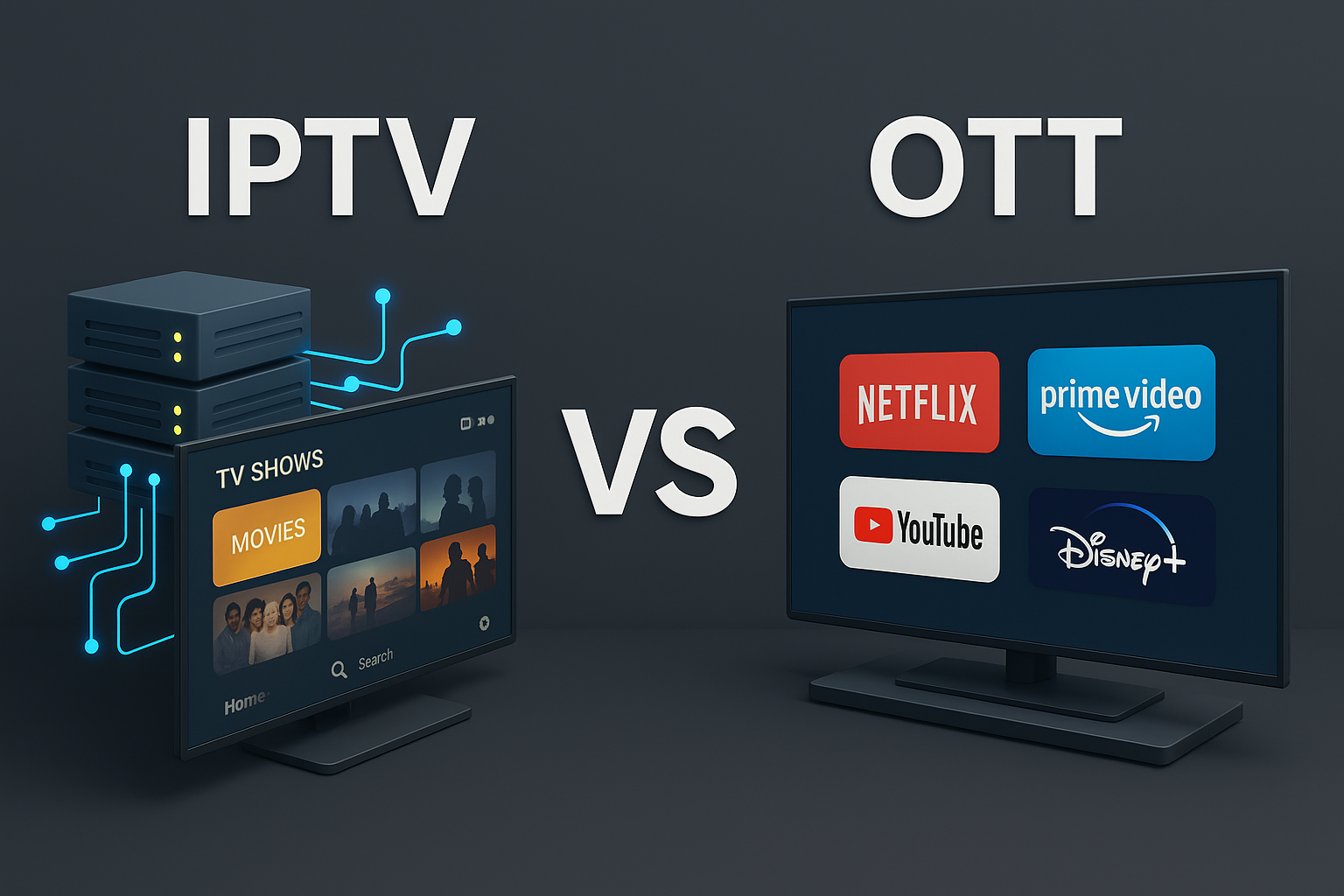
What Is IPTV? (Engineered Streaming with Maximum Control)
IPTV (Internet Protocol Television) delivers television content through managed and controlled networks operated by service providers. Unlike traditional internet streaming, IPTV traffic is prioritized, ensuring consistent quality and low latency.
Key IPTV Advantages
Stable, buffer-free streaming
Reliable HD and 4K video quality
Superior performance for live TV and sports
Features like EPG, catch-up TV, and video-on-demand
Optimized for Smart TVs, Android boxes, and IPTV apps
Because IPTV operates on engineered networks, it offers a premium TV experience similar to cable but with greater flexibility and lower costs.
What Is OTT? (Open Internet Streaming Without Limits)
OTT (Over-The-Top) services stream content directly over the public internet, bypassing traditional TV providers. Popular platforms include Netflix, Amazon Prime Video, YouTube, and Hulu.
Key OTT Benefits
Works on nearly any device
No contracts or long-term commitments
Massive on-demand libraries
Easy setup and global access
However, OTT streaming quality depends heavily on internet speed, server load, and peak-time congestion, which can cause buffering or reduced resolution.
IPTV vs. OTT: Core Technology Differences
The real difference between IPTV and OTT lies in network control:
IPTV uses managed infrastructure, guaranteeing performance and reliability.
OTT relies on open internet bandwidth, offering freedom but less consistency.
This distinction impacts video quality, latency, live TV performance, and overall user experience.
IPTV vs. OTT Comparison Table (2025)
| Funktion | IPTV | OTT |
|---|---|---|
| Network Type | Managed private network | Public internet |
| Streaming Stability | Meget høj | Variable |
| Video Quality | Consistent HD / 4K | Adaptiv |
| Problemer med buffering | Sjælden | Common during peak hours |
| Live TV & Sports | Fremragende | Limited or delayed |
| On-demand-indhold | Strong | Very strong |
| Støtte til enheder | Smart TVs, boxes, apps | Almost all devices |
| User Control | Moderat | Høj |
| Best Use Case | Premium live TV | Flexible on-demand viewing |
IPTV or OTT: Which Is Better in 2025?
The best choice depends on your viewing priorities.
Choose IPTV if you:
Watch live TV and sports regularly
Want stable, high-quality streaming
Prefer a cable-like experience without cables
Choose OTT if you:
Focus on movies and series
Watch content on multiple devices
Want subscription flexibility
Many users now combine IPTV for live channels med OTT platforms for on-demand content, creating the ultimate streaming setup.
The Future of IPTV and OTT Streaming
With the global expansion of fiber internet and 5G networks, both IPTV and OTT are improving rapidly. IPTV continues to dominate in quality and reliability, while OTT remains unmatched in accessibility and content diversity.
The future of entertainment lies in hybrid streaming, where engineered IPTV performance meets the freedom of OTT platforms.
Final Verdict: IPTV vs. OTT Explained
IPTV vs. OTT is not about which technology wins but which fits your lifestyle. IPTV delivers controlled, high-performance streaming, while OTT offers open access and convenience. Knowing the difference helps you make smarter choices and enjoy the best possible viewing experience in 2025.
 Danish
  English (United States)
  German
  Dutch
Dutch  Swedish
  English (UK)
  English (Australia)
  English (New Zealand)
  Norwegian